
EB Builders Roofing and Renovations
A roof doesn’t always leak where you’d expect it to.
When homeowners notice a water stain on the ceiling or moisture near a wall, it’s easy to assume there’s a problem with the shingles directly above it. But some of the most common trouble spots are actually the areas where your roof meets something else.
Chimneys, plumbing vents, and skylights all create openings or transitions in a roofing system. These areas rely on properly installed flashing, seals, and other materials to keep water moving where it belongs: off your roof.
And in Western New York, where heavy rain, snow, ice, and changing temperatures are part of the deal, those details matter.
Why These Areas Are More Vulnerable?
Your shingles are designed to shed water, but they aren’t working alone.
Whenever a chimney, vent pipe, or skylight interrupts the roof surface, additional materials are needed to protect that transition. Over time, those materials can deteriorate, shift, or develop gaps.
That doesn’t necessarily mean your roof needs to be replaced. It means the source of the problem needs to be identified before deciding what to repair.
1. Chimneys: It’s Often About the Flashing
The area where a chimney meets the roof is particularly vulnerable because two different structures come together.
Metal flashing helps direct water away from that connection. When flashing becomes loose, damaged, corroded, or improperly installed, water can find its way underneath the roofing materials.
Chimney masonry and mortar can also develop problems that allow moisture to enter.
What homeowners might notice:
● Water stains near the fireplace or chimney
● Damp drywall after heavy rain
● Visible gaps or deteriorating materials around the chimney
The important distinction? A leak near your chimney isn’t automatically a shingle problem.
2. Plumbing Vents: Small Openings, Real Problems
Those pipes sticking up through your roof serve an important purpose. Plumbing vent pipes help your home’s drainage system function properly.
Where each pipe passes through the roof, a flashing boot creates a weather-resistant seal.
Over time, rubber components can crack, harden, or pull away from the pipe. When that happens, rainwater can enter around the opening.
Because these components are relatively small, the damage isn’t always obvious from the ground.
A failing pipe boot may be a localized repair rather than a reason to replace an entire roof.
3. Skylights: When the Leak Isn’t Coming From the Glass
Skylights bring natural light into a home, but they also introduce another transition that needs proper protection. When water appears around a skylight, homeowners often assume the glass or window itself is leaking. Sometimes that’s the case. Other times, the issue involves flashing, surrounding roofing materials, or condensation.
Potential warning signs include:
● Water stains around the skylight opening
● Dripping during heavy rain
● Discoloration or bubbling paint on surrounding drywall
Finding the actual source matters. Replacing a skylight won’t necessarily solve a problem caused by the roofing materials around it.
Why Western New York Weather Makes a Difference
Roofs in the Jamestown and surrounding Western New York area experience a wide range of conditions throughout the year.
Freeze-thaw cycles can put stress on vulnerable areas. Snow and ice can slow drainage, while wind-driven rain can expose weaknesses around flashing and seals.
A small opening that goes unnoticed during dry weather may become much more apparent during a stretch of heavy precipitation.
And because water can travel along roof decking or framing before becoming visible indoors, the stain on your ceiling may not be directly beneath the entry point.

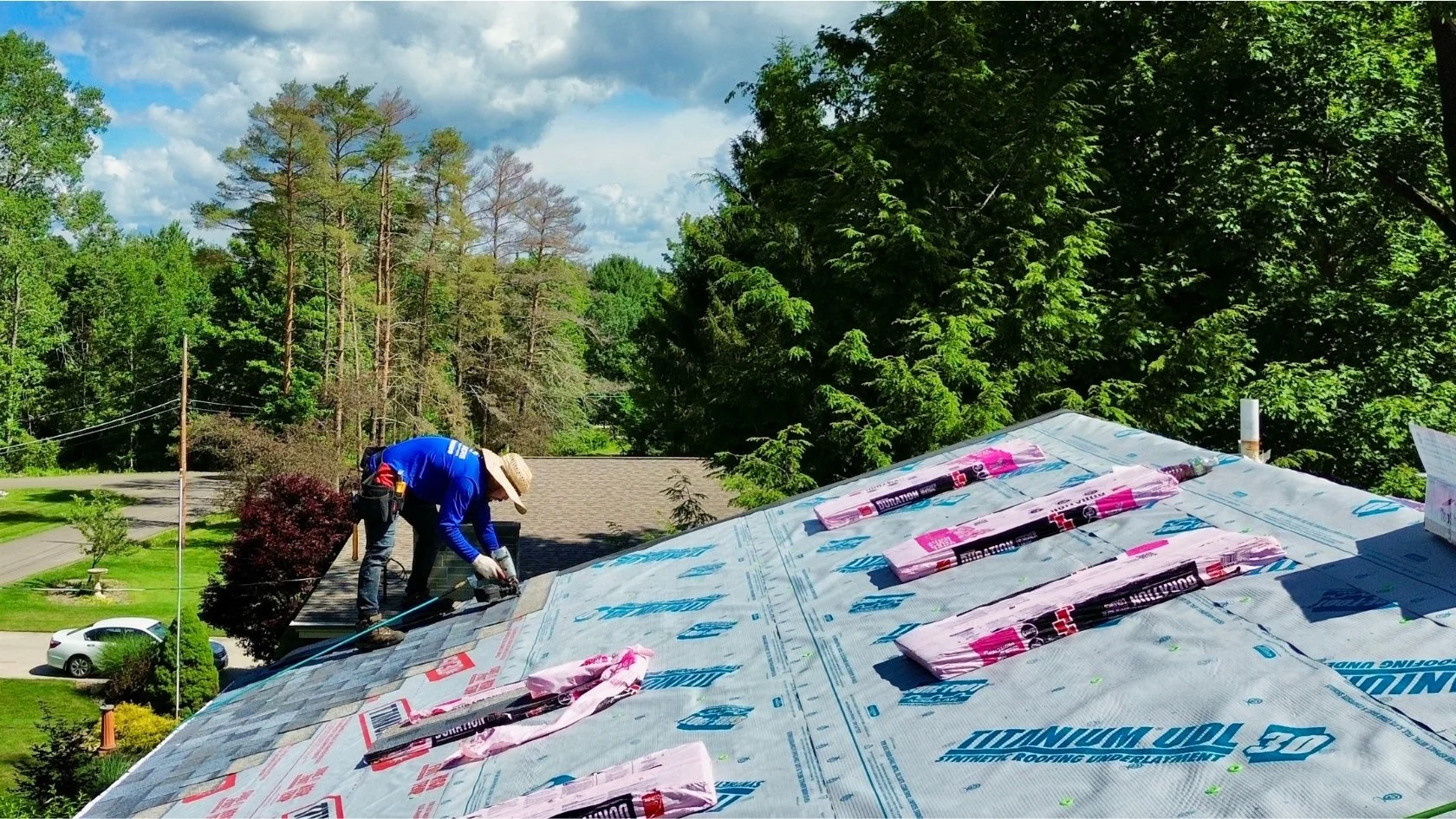
We’re putting on our unofficial meteorologist hat and looking at what experts are saying about the 2026–27 Western New York winter — plus why, from a roofer’s perspective, we’re keeping an eye on water.