
What Your Roof Can Tell You Before There’s a Problem
EB Builders Roofing and Renovations
Most homeowners don’t think about their roof until something gives them a reason to. A ceiling stain shows up after a heavy rain, a few shingles come loose in the wind, or water finds its way into a part of the house where it clearly doesn’t belong.
At that point, the roof goes from being something in the background to something that needs an answer quickly.
But one of the biggest advantages of having your roof inspected before there is an obvious problem is that you get to make decisions while you still have time to make them well.
That may sound simple, but it can make a major difference.
A roof inspection is not only about finding damage. It can also help you understand whether your roof is holding up the way it should, whether there are areas worth watching, and whether you should be thinking about a repair, restoration, or replacement sometime down the road.
Sometimes the most useful thing we can tell a homeowner is that they do not need to do anything right now.
Roof Problems Do Not Always Announce Themselves
A roof can have an issue developing long before there is a visible leak inside the house.
Water can work its way into weak points around flashing, roof penetrations, valleys, transitions, or areas where drainage is not working the way it should. Shingles can also begin aging, drying out, or losing flexibility without creating an immediate interior problem.
That does not mean every older roof is failing.
It does mean that the condition of a roof is difficult to judge from the ground or from the age of the shingles alone.
We have been on plenty of roofs where the homeowner expected the worst and the roof was still in good shape. We have also inspected roofs that looked fine from the driveway but had smaller issues beginning to develop in areas the homeowner would never have been able to see.
That is where an inspection becomes useful. It gives you information before the roof forces the issue.
Knowing Earlier Gives You More Room to Plan
There is a big difference between knowing that your roof may need attention next year and finding out it needs attention because water is already coming through the ceiling.
When we inspect a roof early enough, the conversation can be much more practical.
Maybe there is a repair that can be handled now and monitored going forward. Maybe the roof is aging but still has usable life left. Maybe the shingles are in a condition where a restoration treatment could help extend that life. Or maybe the roof is getting closer to replacement, but there is no immediate emergency.
In that situation, a homeowner can start planning.
You have time to understand the cost, ask questions, consider materials, look at your budget, and decide when the project makes the most sense for your household.
That is a much better position than having to make those same decisions under pressure.
Sometimes the Best Recommendation Is to Wait
There is a tendency in roofing to assume that every inspection is supposed to end with a project.
We do not look at it that way.
If a roof is doing what it should and there is nothing that needs immediate attention, we are comfortable saying that.
If there is one small area that needs to be repaired, that does not automatically make the rest of the roof a replacement candidate.
If the shingles are aging but the system is still sound, we may talk about whether Roof Maxx® restoration is an option. For qualifying asphalt shingles, a treatment can restore flexibility and add five years of life.
And if replacement is the right answer, we want there to be a clear reason for that recommendation. The goal is to understand what the roof needs now, what it may need later, and what does not need to be touched at all.
Early Information Can Protect More Than the Roof
When roof problems go unnoticed, the damage does not always stay on the exterior.
Once water gets past the roofing system, it can affect decking, insulation, ceilings, drywall, and other parts of the home. Depending on where the water travels, the visible stain inside may not even be directly below the original entry point.
That is part of what makes leaks frustrating.
The homeowner sees the symptom only after water has already found a path through the system.
Finding an exterior problem before it reaches that point can mean the difference between addressing one roofing issue and dealing with additional interior repairs as well.
Again, that does not mean every roof needs constant attention. It simply means there is value in knowing what is happening before there is evidence inside the house.
Late Summer and Early Fall Give Western New York Homeowners a Useful Window
Western New York roofs deal with a wide range of conditions throughout the year.
Summer heat, thunderstorms, wind, heavy rain, falling branches, freezing temperatures, snow, and repeated freeze-thaw cycles all affect roofing systems differently.
By late summer, we have a good opportunity to see how a roof is holding up before another winter begins.
That is especially useful if there is something you have been wondering about already. Maybe the roof is getting older. Maybe you noticed a few shingles that look different from the rest. Maybe you bought the home recently and do not have a great history on the roof. Or maybe you simply want to know whether there is anything worth addressing before colder weather sets in.
An inspection at that point does not need to create urgency.
It can simply give you a clearer picture.
If everything looks good, you can head into the next season knowing that.
If we see something that should be repaired, there is still time to deal with it.
If the roof is getting closer to a larger decision, you can start thinking ahead instead of finding out in the middle of winter or during the next heavy rain.
Good Roofing Decisions Usually Start With Better Information
Homeowners have more options than they sometimes realize.
A roof problem does not automatically mean replacement. An older roof is not automatically a bad roof. And a roof that is not leaking is not automatically a roof that should never be looked at.
The condition of the system is what matters. That is why we would rather help homeowners understand where their roof stands before there is pressure attached to the decision.
Maybe the answer is a repair. Maybe it is restoration. Maybe it is replacement sometime in the future.
Or maybe the answer is simply, “You are good for now.”
There is value in all four of those answers.
The important part is knowing which one actually applies to your home.
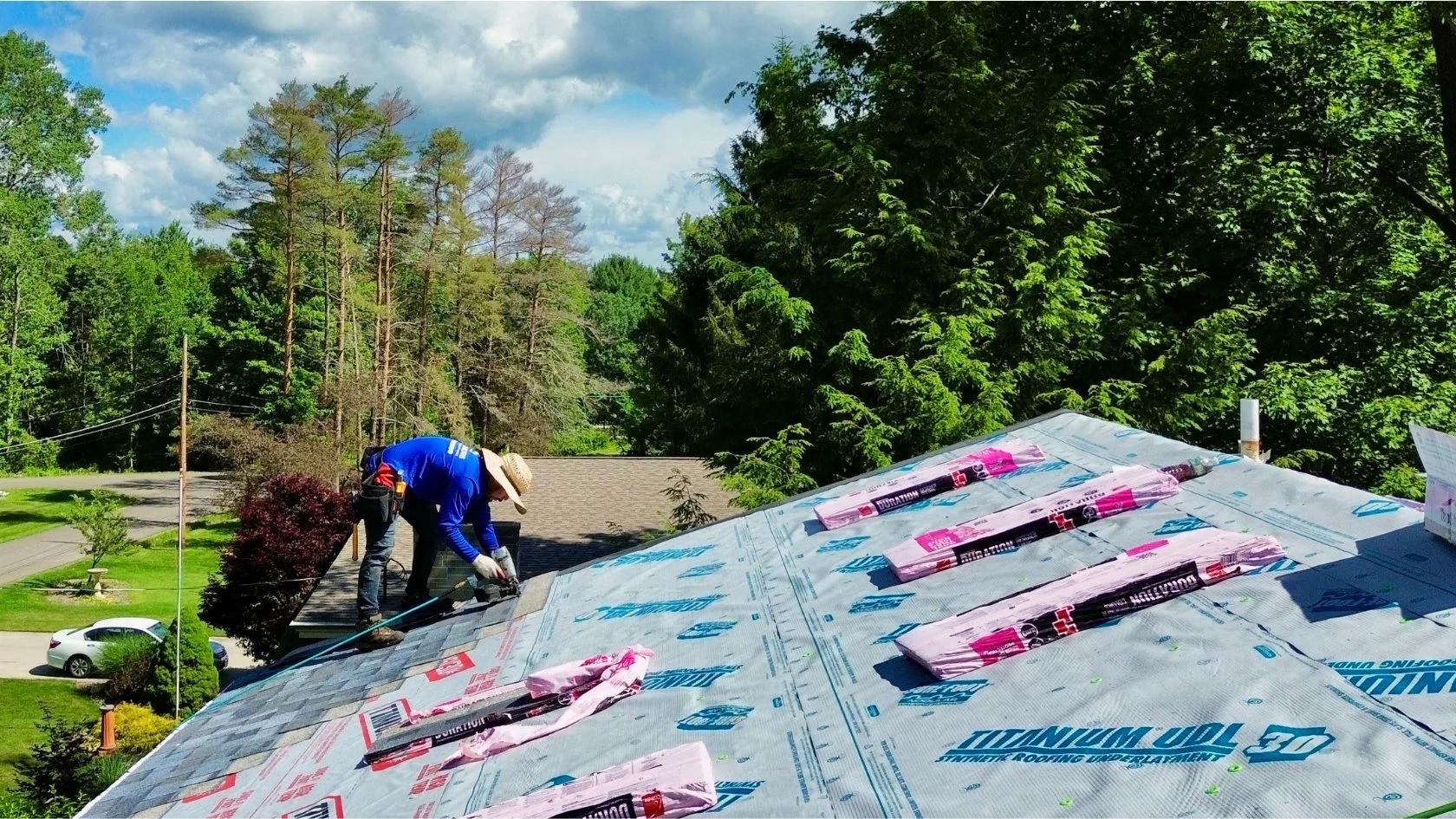
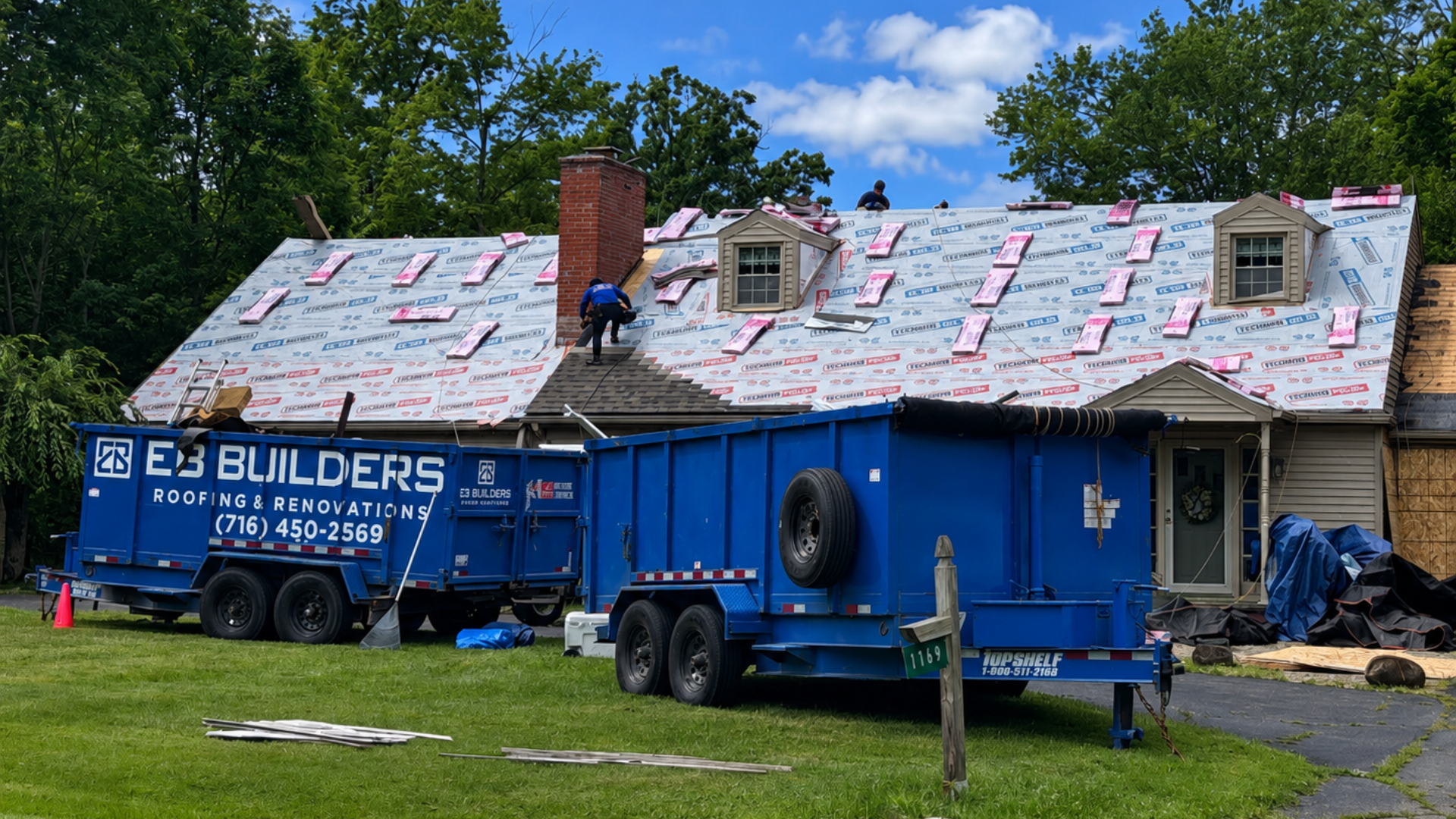
We’re putting on our unofficial meteorologist hat and looking at what experts are saying about the 2026–27 Western New York winter — plus why, from a roofer’s perspective, we’re keeping an eye on water.